
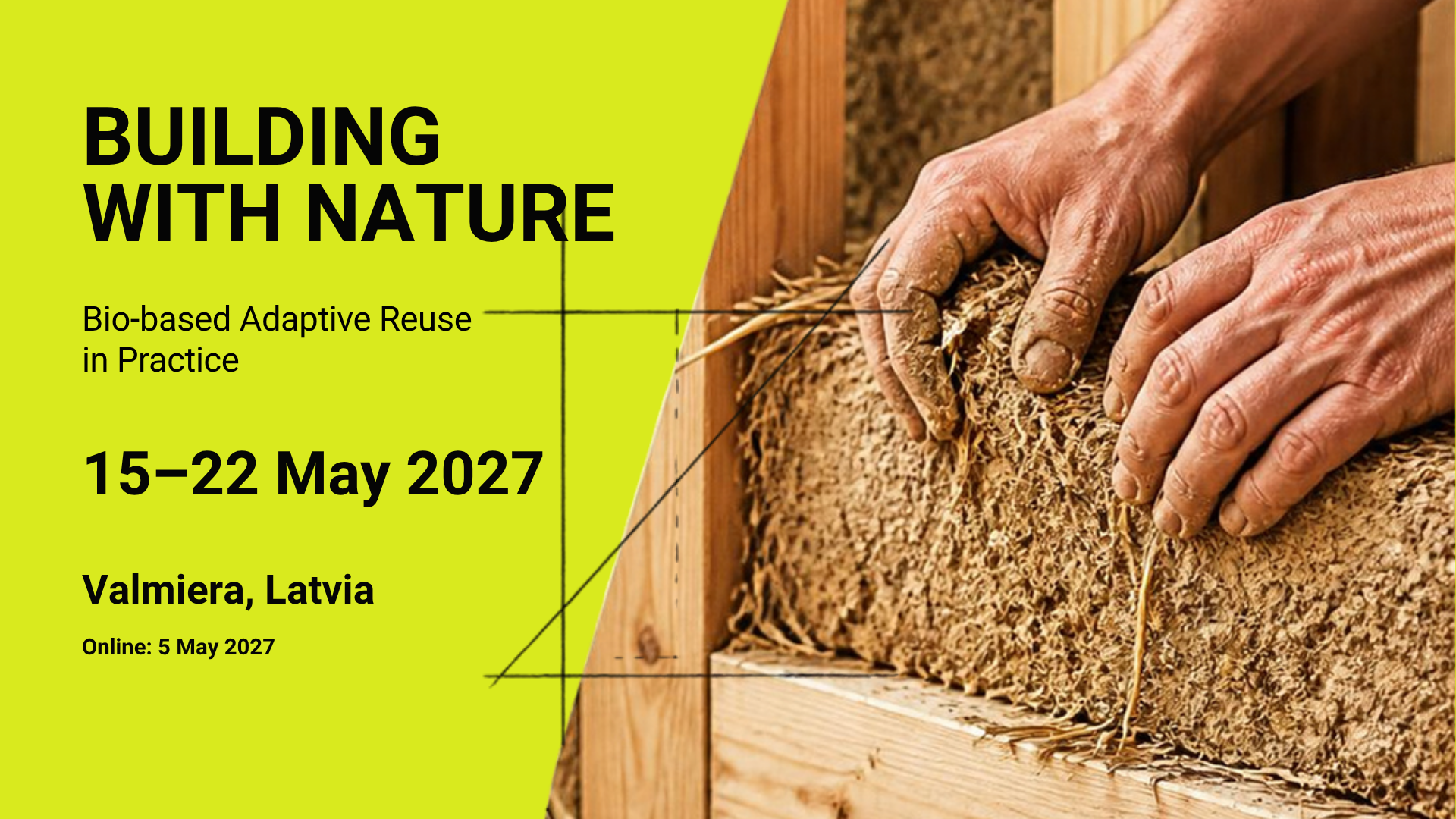
Erasmus+ BIP “Building with Nature: Bio-Based Adaptive Reuse in Practice”
Onsite: May 15 -22, Latvia, Valmiera
Online component: May 5
Application deadline: March 9
Building with Nature: Bio-Based Adaptive Reuse in Practice is an international Erasmus+ Blended Intensive Programme (BIP) organised by the School of Sustainable Construction at Vidzeme University of Applied Sciences (ViA). The programme focuses on implementing an adaptive reuse project in an existing university facility building, using bio-based materials such as straw panels, hempcrete, limestone, clay, fibre building, and hybrid construction techniques and prefabrication processes.
Building on a collaborative design concept developed in the previous EUDRES living lab, participants will design, engineer, and implement building elements; explore material applications and construction detailing; and gain hands-on experience in on-site implementation. Under the guidance of skilled craftsmen, mentors and academic staff, students will connect contemporary building technologies with traditional craftsmanship methods.
The programme combines virtual preparation with an intensive practical workshop in Valmiera, Latvia. It offers an opportunity to explore how bio-based materials and sustainable construction practices can contribute to the transformation and continued use of existing buildings.
*Before applying, please get in touch with your university coordinator regarding Erasmus+ mobility funding opportunities. Selected participants will be informed individually after the selection process.
Programme Focus
The programme explores adaptive reuse, bio-based building materials, hybrid construction techniques and prefabrication. Through hands-on workshops, participants will design, engineer and implement building elements, combining sustainable construction practices, resource efficiency and traditional craftsmanship with contemporary building technologies in an interdisciplinary, international learning environment.
Learning Approach
Challenge-based learning; research-by-design methodology; collaborative teamwork; fieldwork and spatial observation; stakeholder dialogue and community engagement; mentoring, reflection, and feedback sessions; practical prototyping and design workshops.
Learning Outcomes
Participants will learn to: analyse spatial, social, and material conditions of peripheral territories; apply adaptive reuse and low-impact construction principles in spatial proposals; integrate community input into design and planning processes; work effectively in international interdisciplinary teams; critically reflect on the societal role of spatial and technical professionals.
Dates and Format
Virtual component
May 5, 2027
Physical programme
15-22 May, 2027
Venue
Valmiera city, Campus of Vidzeme University
Hosting Institution
Vidzeme University of Applied Sciences (ViA)
Field and Level of Study
Architecture, construction, spatial planning, sustainability, and interdisciplinary territorial development. Bachelor’s, Master’s, and PhD level.
Credits
6 ECTS
Course Language
English
Mentors and team:

Marija Katrina Dambe
Lead mentor, an architect and leader of NOMAD architects’ sustainable architecture practice. Author of the Latvian exposition at the 2025 Venice Architecture Biennale. PhD researcher at Estonian Art Academy

Uldis Grīnfelds
Lead mentor, bio-based construction materials expert, applied craftsman and builder. Wood fibre scientist turned product innovator.
Contact
Academic coordinator Marija Katrīna Dambe 📧 marijakatrina.dambe@va.lv
International coordinator in student mobility;
International coordinator in staff mobility Ance Annija Koreņkova 📧 anceannija.korenkova@va.lv

Gunita Ķiesnere
Operational support. Community engagement and co-creation facilitator. An architect, practised in urban planning and turned into a tech entrepreneur.
4.86/5
Average participant rating,
based on feedback from 35 participants, 2025–2026